710 Hopewell Drive, Suite 102, Charleston, SC 29492


Cold weather can be tough on pets, especially those with short coats or existing health issues. This guide on winter pet care covers essential ways to keep your furry friend safe, cozy, and healthy during the chilly months. From proper grooming and warm bedding to nutrition and outdoor precautions, we’ll help you create a winter-ready routine that protects your pet’s well-being. These tips are particularly helpful for senior pet care, where temperatures can still drop unexpectedly. Learn how to prepare for the season and safeguard your pet’s comfort
1. Understanding Your Pet’s Winter Needs
Even in a mild climate like Charleston, SC, pets can feel the chill. Animals are sensitive to temperature changes, and their winter needs depend on factors like age, coat type, and health condition.
- Short-haired breeds and small pets lose body heat quickly.
- Senior pets often struggle with arthritis or circulation problems in colder weather.
- Outdoor pets need extra care, including insulated shelters and constant access to unfrozen water.
Knowing your pet’s specific needs is the first step toward effective puppy and kitten care.
2. Keep Pets Warm Indoors
Your home should be a warm haven for your pets during cold months.
- Maintain moderate indoor temperatures — not too hot or too cold.
- Provide soft bedding away from drafts, windows, and uncarpeted floors.
- Consider heated pet pads for older pets or those with joint pain.
Avoid space heaters near unsupervised pets, as they pose burn and fire risks. Keeping your pet’s sleeping area cozy ensures they stay healthy all winter.
3. Protect Their Skin and Paws
Cold air and low humidity can dry out your pet’s skin. Add these habits to your winter pet care routine:
- Limit baths to prevent stripping natural oils.
- Use vet-approved moisturizers or paw balms to soothe dryness.
- Wipe paws after walks to remove salt or de-icing chemicals.
Check for cracks or redness regularly. Paws and pads are especially vulnerable when walking on icy or salted surfaces.
4. Nutrition and Hydration in Cold Weather
Metabolism can change in winter. Pets may burn more calories staying warm, but indoor pets might need fewer treats since activity levels often drop.
- Feed a balanced diet suited to their energy needs.
- Always provide fresh water — never frozen or stagnant.
- For senior pet care, speak with your vet before adjusting diet or supplements, especially for pets with kidney or joint issues.
Proper hydration helps maintain healthy skin, coat, and overall energy during winter.
5. Exercise Safely Outdoors
Cold weather doesn’t mean skipping exercise — it means adapting it.
- Take shorter walks more frequently instead of long ones.
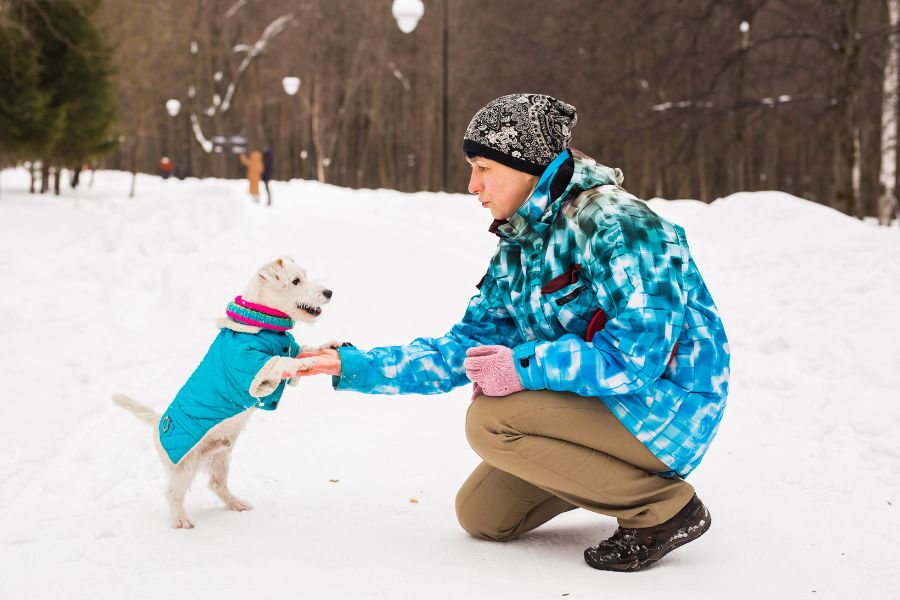
- Use pet jackets or sweaters for short-haired breeds.
- Avoid icy areas where slips could cause injury.
If it’s too cold for you, it’s too cold for your pet. Check their ears, paws, and nose for signs of frostbite after outdoor play.
6. Grooming Tips for Winter
Good grooming helps your pet’s coat stay insulating and healthy.
- Brush regularly to remove tangles and distribute oils.
- Avoid shaving your pet’s coat too short before winter.
- For long-haired breeds, trim around the paws to reduce ice buildup.
Healthy skin and fur are your pet’s best defense against the cold.
7. Recognizing Winter Health Risks
Colder months can aggravate certain health issues. Look for signs such as:
- Limping or stiffness, especially in older pets (possible arthritis flare-up).
- Coughing or nasal discharge, which may signal respiratory infections.
- Excessive licking of paws, which can indicate irritation or frostbite.
Schedule routine checkups at a vet clinic near you, to catch issues early. Preventive visits ensure your pet remains healthy all season.
8. Winter Safety for Senior Pets
Older pets need extra attention when temperatures drop.
- Provide orthopedic bedding for joint support.
- Keep them indoors during cold snaps.
- Watch for signs of confusion or restlessness, which can worsen in winter.
If your pet seems sluggish, eats less, or has mobility issues, your Veterinary Hospital in Charleston, SC can recommend supportive therapies or medications to help.
Winter is a wonderful time for cozy cuddles, but it can also bring hidden hazards for your furry family members. By focusing on warmth, hydration, grooming, and safe outdoor activities, you can keep your pets happy and healthy throughout the season. For more personalized advice, consult your veterinarian or visit Cainhoy Veterinary Hospital today to learn how to safeguard your pet’s well-being this winter.
Frequently Asked Questions
1. How cold is too cold for pets in Charleston, SC?
When temperatures drop below 45°F, pets — especially short-haired or senior ones — should be kept indoors. Always monitor their comfort level during walks.
2. Can pets get frostbite in mild climates like Charleston?
Yes, especially on ears, paws, and tails. Even brief exposure to cold, wet conditions can cause frostbite if the pet isn’t protected.
3. What are signs my pet is too cold indoors?
Shivering, curling up tightly, or seeking heat sources are signs your pet needs more warmth or a cozier sleeping area.
4. How can I help my senior dog stay active during winter?
Opt for short, gentle walks and low-impact indoor play. This helps keep joints flexible while avoiding overexposure to cold.
5. Should I change my pet’s diet during winter?
Maybe. Some pets burn more calories, while indoor pets may need less food. Consult your nearest Animal Hospital for a balanced winter diet plan.